

HEN HE ATA INT RETTY
W
T
D
A
P
a bulletin board for the thoughts and information in my brain
My Items
I'm a title. Click here to edit me.

Before You Become a Data Scientist
If you’re thinking about a career in data science and don’t know much about it, where to start, or if you even want to make the jump into this world, you’re in the right place. I began my career as a data scientist after five years of studying a BA in English and a BS in Computer Science. (What??? Yes, I know — this story is for a different time.) As an undergrad, I had actually sworn I would not pursue a career in tech, but somehow found myself scrolling through data science job openings after I graduated from college. But long story short, I was drawn to jobs in which I thought I could further explore the bridge between the humanities and the sciences, where I could apply my story-telling brain to the unraveling of data. Since then, I’ve learned so much more about this expansive world and am sharing with you what worked for me in helping me land a job as a data scientist as well as what I wish I had known when I began. So, before you become a data scientist, here are a few things I would urge you to do. 1. Evaluate Your Goals — Why Do You Want to Become a Data Scientist? I have always believed that people who can balance multiple disciplines and integrate them smoothly into one goal are the ones who can make a true impact in this world. As I considered various job titles that could offer me self-fulfillment, healthy challenges, and an opportunity to explore what my mind could do, I ended up choosing the multi-faceted field of data science. It was an opportunity to combine my affinity for the social sciences, research experience, and technical skills. My question for you is why do you want to become a data scientist? Is it for the money, the prestige, the novelty? There is, obviously, no right answer for this. But you really need to evaluate what it is that attracts you to this field. The reason being is that “data scientist” is just one of the many titles of professionals who work with data in different ways. When you define your goals for the job, you can make a more informed decision about which job title you’re actually looking for. If you come from a highly technical background and wish to continue programming all day then you might be more interested in becoming a data engineer, someone who builds the technologies that help bring valuable data to a data science team to evaluate. Whereas if you’re interested in machine learning and statistical methodologies then data science just might be for you. In either case, you’ll be working in the growing field of data science, doing what you do best and learning what it is you want to learn. If you do think you want to become a data scientist, there are aspects of the job that often aren’t described on the job description but just come with what it takes to build a model. There is a tremendous amount of manual work that a data scientist needs to do in order to understand and clean the data, at least initially. To build a valid test data set, a good data scientist will think through and architect the best way to make sense of the data before applying labels to it. I would argue that I spend most of my time (maybe 80%) researching, labeling data, transforming and cleaning the input, writing documentation, and organizing information. You will be getting nice and cozy with excel, documentation platforms like Confluence, and Pandas (or other data manipulation package). The machine learning portion of the job is minuscule, and, arguably, plug-and-chug. Until you get to a higher level position with either years of experience or a higher degree in data science under your belt, I’m not sure if you’ll be doing the glorified tasks of a data scientist at your first job. In fact, if you’re really interested in the machine learning then what you’re looking for is a job as a machine learning engineer / scientist. A data scientist will build models using already existing packages and methodologies, not invent new ones. 2. Don’t Be Fooled By Titles — Read The Job Descriptions, and Read Them All!!! Among the several job titles that are floating around in the market (i.e. data scientist, data engineer, data analyst, etc) some can be misleading. So, please, Please, PLEASE do your homework in reading the entire job description. You will find that the job description of the same job title will vary from company to company. What you should pay attention to are the programming languages (Python, R, SQL, etc) and the technologies (TensorFlow, Tableau, Flask, etc). A data scientist who is expected to know Python, SQL, and TensorFlow will likely be working with querying data frequently, manipulating it, and building models. A data scientist who is expected to know Tableau and have business or marketing experience might actually be more of an analyst who communicates between the data science team and the business side of the company. By reading a job description in its entirety, you will be able to envision what your day-to-day might actually look like. And, you can ask yourself if the job description matches your WHY. Sometimes, it’s true that we don’t know our WHY’s. In that case, you should REALLY read the job descriptions. And, may I suggest that you read them ALL? When you don’t know where to begin, or how to define what you’re looking for then read as many job descriptions as you can. You’ll find that some bullet points will stand out to you, and you’ll find yourself feeling disappointed when you don’t see it in another job listing. Or, vice versa, you might see a specific feature of a job such as “acts as liaison between data science team and internal clients”, and will feel a certain aversion to it. In that case, you may learn that you don’t want to work in a client-facing job. This exercise (think of it as research) will help you develop your why or at least tell your why not. The field of data science is not new but it is new. Many companies are jumping into this now! And — the jobs they are offering will be very different. So, unless the mere presence of the title, “data scientist”, on your official acceptance letter and CV is what gives you total fulfillment, do not simply chase the title. This field is expansive, and there are many opportunities to dive into data science from the angle that is most comfortable to you, whether as an engineer, business person, and/or statistician. 3. Ask the Right Questions — Your Job Interviews Are Just As Much For YOU As They Are For Employers Candidates often get psyched out by the interview process, focusing so much on whether or not a company wants them that they often forget that these interviews are an opportunity to deepen their understanding of what they are potentially getting themselves into. When they ask, “Do you have any questions for us?”, ask the right questions. I mean, ask the right questions for you. When you understand you Why and your Why Not, and focus your attention to the job description as opposed to the title, these questions will come more naturally to you. But, of course, I do believe it would help you if I gave you a few examples to show you how to think about these questions, and, consequently, what to make of the answers. If you come from a background in tech and are more inclined to use certain technologies over the ones listed in the job description, you may want to ask why they choose to use that technology. “I see that you use Luigi, but I am much more familiar with the benefits of AirFlow; Could you tell me why your teams uses Luigi?” Just as an interviewer would like a well thought out answer from you, you might want a well thought out answer from them, especially in this case if you’ve run across many limitations using Luigi, or other software, in the past, yet the company you’re interviewing at is stuck using outdated software. [Disclaimer: I have no bias toward either. Actually, I use Luigi and have never touched AirFlow. This is for the sake of the example. ;) ] Another great question to ask is about the size of the team, age of it, and existing implementations of what that team has created for the company. Depending on the answer, you’ll get an understanding of how innovative they are, whether or not the team is integrating “data science” to say they’re doing data science, or how many project you might expect to work on in a year. If you want to be in a team that is forward-thinking, ahead of the curve, and produces frequent outcomes then their answer will be telling for you. 4. You Can Do It If It’s What You Want — Do You Have Time, Money, Both, or None? Let’s say that you’ve read this far and you have absolutely no idea about any of the technical terms I used above, do not fret. Regardless of what background you come from, I believe that data science is a relatively accessible field that is definitely possible to break into. But, the further away your background is from data science, the more motivated you need to be to put in the work to becoming a data scientist. Though I had my computer science background, I had zero statistics background, which (I didn’t know back then but…) is very important to the job of a data scientist!!! And yet, I landed a job as one. Actually, I landed a job as a Jr. Data Scientist. After my boss interviewed me, he was excited by my curiosity and perspectives, so he wanted to invest in me. Having had little experience in data science, I knew that in order to break into the field, I needed to go back to school to specialize, take some time to build a portfolio, and/or find a job that was willing to teach me. Because I wasn’t sure if data science is something I wanted to invest that much time and money into, I chose the third option to get paid to learn. If you’re just coming out of a related field, but don’t have direct or extended experience in data science, you can find a position, like mine, where someone wants to teach you, and they’ll pay you for it. What? it sounds like a hoax to you? Well, don’t be too skeptical. There really are many teams out there that, for whatever reason, need a Jr on board who they are willing to teach. If you’re just coming out of a related field, but have no interest in becoming anyone’s Jr then you need to arm yourself with a CV that can get you a mid-level job. There are many free resources for learning about data science and implementing projects of your own (i.e., Towards Data Science, Kaggle, Harvard, Coursera, etc). If time and money aren’t an issue for you then there are also so many more schools that offer boot camps and masters’ programs that are related to data science. Whichever way you fill your CV, I am sure that your aptitude is what will shine through to companies, and you will land a job. And, guess what, the technologies and methodologies you’ll choose to focus on in your self-assessed curriculum or in the formal class will all be guided by your Why and what you learned from that job description HW assignment. The jobs you’re interested in will have a set of qualifications. Use them as guidance for how to shape project portfolio and/or academic CV. The same applies to people who are coming from a completely unrelated background. If you are still in undergrad and have the time and money to make the switch, then go for it. But, if you’re still unsure but want to test the waters then take one of the following types of classes: statistics, introduction to computer science, computer science and business. But if you’re already graduated, or haven’t enrolled in a university then you must work on teaching yourself or getting yourself the degree needed. Like I said, if money is a problem then that is no problem. A great place to start is by looking at those job descriptions and familiarizing yourself with the technology listed. Google it. Google it all. Google is free. Google is a friend. Seriously. Google, google, google. If any of the technologies interest you then search for tutorials on how to implement them. The resources you need are all out there. Computer science is an extremely accessible field as long as you have a working laptop. If time is your concern, then still do whichever of the above that relates to you, but actively apply to jobs in the meantime. You seriously never know who will want to take you under their wings. 5. Choose Your Industry and Company Wisely — How Do You Want To Make an Impact? So, after all that, you know you want to be a data scientist…but what kind of data science? And, I’m not just talking about the technical aspects of the job description any more. I’m talking about the good stuff: the data. What kind of data do you want to be working with??? And, trust me, this MATTERS. Why? Because this is EVERYTHING you’ll be interacting with… All day, every day. (Side note: This is a great additional question you can spin at an interview.) How to figure this out? Think about the following…Do you want to be sifting through all of the data related to fashion? education? recruiting? oil? If your current interests align with your background then it would be easy to find an industry through which you can break into data science. For example, say you’re a teacher who’s gone through all of my recommended steps (1–4) and feel that your experience as a teacher will give you a unique perspective and edge as a data scientist working in a company that produces the best learning technologies for kids, then you are probably right! So, use that to your advantage. Deciding on an industry will either give you the upper hand as it relates to your background and/or become a new frontier you’ve always wanted to explore. Either way, the industry is very important. It will determine the overall experience you have as a data scientist because though the technical responsibilities may be the same, sorting through a bunch of songs will be an entirely different experience from sorting through stocks. Once you’ve chosen an industry, be mindful of the companies you work for. If simply breaking into the field of data science is important to you then it doesn’t really matter how established the data science team is at your company. However, in my experience, there is a difference between a company that collects data for data science and one that simply had data to begin with. There are many older companies that have so much data they’ve collected over the years but never collected it for the purpose of exploration. If you’re up for the challenge and prepared to meet many dead ends and loopholes in the messiness of the data then this can be an exciting opportunity for you. But if you’re looking for a company that has data science at the forefront of its products then make sure you adjust your job filter accordingly. 6. Don’t Settle On Your Work Place — What Do You Deserve? Like I said, the job application process is not just about what companies want. It’s about what you want. And, you deserve it. The idea that you enter a company purely for monetary gain is very outdated. Your well-being as a complete human is extremely important. So, please, figure out if the environment is what’s healthy and productive for you. Make sure you treat yourself to coworkers and a company that will make you feel like you belong and give you whatever resources and treatment you need. For example, if you are a woman, make sure you’re in a company that not only emphasizes equal opportunity despite gender, but one that actually has at least half, or maybe even majority (or all!) female data scientists. If you are expecting to welcome a child into your family, make sure that your company has the appropriate parental leave for what works for you; even if you’re a dad-to-be, make sure that paternity leave allows you the flexibility you need to spend time with your child. Let’s say that you really don’t want to be bothered by other people during the work day, make sure your company offers fully remote or flexible work from home accommodations. But, what if you have no experience? Can you still be picky? You can most definitely be selective. If you know what you want, then ask for it. The company will either say yes or they will say no. And, rejections are the universe’s blessings. You will be the best judge of how to gage what is your priority: money, environment, location, team demographics, etc. And, you can adjust your asks accordingly. Ultimately, you do know your worth. You know what you can offer the company, and the company just needs to decide if that’s what they want or not. There is no linear formula to finding your way to becoming a data scientist. But there is so much you can do to personalize your experience to ensure that whatever company you land next will be your ideal next step. I wrote this article so that you are as equipped as possible when trying to navigate the millions of data science roles out there. It can be daunting, but, don’t worry; you will find your way. Whether your pondering over the field turns you toward it or away from it, you will end up where you are meant to be.
Till Next Time,
michelle
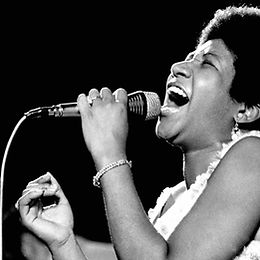
this day in women's history | day 3
1987: Aretha Franklin becomes the first woman inducted into the Rock and Roll Hall of Fame On January 3, 1987, singer Aretha Franklin became the first woman inducted into the Rock and Roll Hall of Fame. The Hall inducted its very first members -- all men -- just one year prior, in 1986, and critics quickly commented on the lack of female representation. Although many were pleased with the Hall's choice to include a woman in its second class, gender [in]equality has continued to plague the organization. In over three decades, only around three dozen female performers or bands -- just over 10 percent of all honorees -- have been inducted into the Hall, with no behind-the-scenes individuals, such as managers or producers. Aside from her groundbreaking induction, Franklin -- also known as the Queen of Soul -- had an astonishing career spanning over five decades. She was nominated for forty-four Grammy awards, including eighteen wins. A self-taught pianist, she also performed at the inauguration of three U.S. presidents. Franklin passed away on August 16, 2018, at the age of seventy-six. R - E - S - P - E - C - T !!!!! Go, Aretha Franklin! Not only is she the first woman to be inducted to the Rock and Roll Hall of Fame, but she is also a woman of color!!! This is not only a win for women artists but a huge win for black musicians. The beauty and burden of intersectional identities is this: the ability to represent multiple, underrepresented demographics. And, guess what. She was just 25 years old when she got inducted into the Hall. So, that's a win for yet another demographic: young musicians. Franklin's most famous and renowned song, "Respect", is often referred to as the anthem for female empowerment, but it also became an empowering song for the black American community. Like with what I wrote about Oprah Winfrey, I can't imagine how incredible it would be to have witnessed the revolutionary rise and acknowledgment of a young, female, black singer, who came to be known as the "Queen of Soul." I get shivers down my back thinking about it. And to think that someone of that intersectional identity could be a role model for not only her direct community but also for anyone who is familiar with being treated with anything less than respect in their lives.
R E S P E C T
Find out what it means to me! I love this line where she empowers herself with a very clear dictation of what she deserves, and prompts the recipient to do some work. It's not really difficult work. Everyone deserves respect and shouldn't have to ask for it, but I guess this isn't really evident to some folks. And, sadly, many men didn't (and don't) get it. Sheesh, I don't know. It's not calculus or anything. It's really so simple. One of the first things we learn as kids: treat others the way you want to be treated! Lately, my younger sister and I have been extremely vigilant and analytical about the lyrics we are inundated with in popular culture. So many tunes are sung, without thought, and praised as brilliant even though, many times, the lyrics are degrading to women in one way or another. I am listening to Aretha Franklin's top tracks (shared on left) on Spotify while writing this, and the theme of individualism, freedom, and equality course through most of them, and am realizing that we have a drought of artists who freely express female empowerment as refreshingly as she does. And, it's not just in the context of love. Thank you Aretha! Michelle

this day in women's history | day 2
1980: Sherry Lansing becomes first woman to head major film studio On January 2, 1980, Sherry Lansing became the first woman to head production at a major movie studio as well as the highest-paid female executive in any industry after she was named the president of 20th Century Fox Productions. Before working in Hollywood, Lansing was a high school math teacher working in Los Angeles. With her groundbreaking success at 20th Century Fox, she was able to pave the way for future women leaders in major movie studios. I had no idea who Sherry Lansing is until I read this fact about her. It's amazing to see how women persisted in breaking into fields that they never were in before. To become the first woman to head a production? and then become the highest-paid female executive in any industry is incredible. But! To point something out about the latter -- the gender pay gap has always been huge and continues to exist across all industries. She was the highest-paid female executive. So, while she broke through a major ceiling in women's earning potential across industries, she was still making less than male executives. Her story is especially moving to me because she went from a stereotypically "female" occupation as a high school teacher to become an important figure in the film industry where women, even today, are less frequently heading productions. Whatever field you are interested in, I hope that the typical demographic of those who had previously walked through it never deters you from walking it yourself. At the same time, it is so difficult to be the first; the one who makes a difference. As a woman in tech, I often have to ask myself if I really want to keep fighting to be the best in a field that is still dominated by male culture. At work, locker room talk is rampant -- thank goodness for working from home. And, inappropriate, toxically masculine behavior has existed at every company I've worked for, but has never been as bad as in the tech companies I've walked through. I can't imagine the courage it must have taken to leave a career she was familiar with to pursue one that required her envisioning something for herself that never existed in the past. That's a wrap for today, Michelle

this day in women's history | day 1
365 Extraordinary Women and Events That Shaped History Happy New Year, everyone !!! I don't know about you, but I am very excited for what 2022 has in store for us and this blog. While looking for a balance between getting into the habit of writing and not forcing myself to produce empty pieces, I received the perfect, beautiful gift from my sister this Christmas. Along with a few nonfiction pieces on Korean and world history (which she gifted me for my blog!!! -- T T honestly, so grateful), she also gifted me this daily desk calendar which contains information about a woman or event in history that happened on that specific day, that has impacted and shaped women's lives today. So! You may think this cheating a little, but to help me keep the momentum going on this blog, I decided to share what I learn every day about women's history for all 365 days of 2022. This way, I can practice writing every day. I have no rules attached to this exercise, other than that I will click publish at least once a day. I'm looking forward to sharing with you what I learn, and to see where my interest in each of these topics takes me. Some days, I might just share the little snippet of information straight from the calendar, and, on others, I might do a little more exploration. Without further ado, I present to you the first fact of the year: *drum role please* On January 1, 2011, Oprah Winfrey launched OWN: Oprah Winfrey Network. Raised with modest means by her grandmother in Kosciusko, Mississippi, Winfrey went on to defy the odds and become a business trail-blazer, media mogul, and inspiration for women of all races and all walks of life. In addition to twenty-five seasons as the top talk show host and America's best friend, she was also responsible for launching the successful television careers of Dr. Oz, Dr. Phil, Nate Berkus, and Iyanla Vanzant. It's very amazing to start off this 365 day women's history writing challenge with a fact about Oprah. I didn't grow up watching too much TV, but I remember when everyone knew Oprah's name. She was (and still is) such an iconic figure in television and within American culture. Now, as an adult, looking back on her fame through my teenage years, I am so happy for my black friends and peers...that they got to grow up with such a popular, smart, beautiful, and bright black woman in media to represent them. The importance of representation is that she paved the way for so many other black women to imagine a life in which they, too, could be on television. For me, it isn't until recently that I saw a famous Korean (let alone asian) woman on national television. Well, actually, Sandra Oh, the celebrity I am thinking of probably doesn't have a name that resonates with everyone as much as Oprah's does. I wonder what it would have been like if I had grown up with a Korean, female icon, hosting her own television series. I'm sure it would have had a huge impact in my self worth and sense of belonging. Even though I am an American born, Jersey raised girl, I still felt a divide between myself and my non asian peers. I grew up feeling un-American. Which seriously sucks. Other than the stories I heard from my parents about Korean history, I had no ties to Korea. I never even stepped foot in Korea until I was a junior in high school. Meanwhile, I was born and raised in America, where American didn't look like me. Essentially, this left me feeling like I had zero sense of belonging. Thank goodness, my dad has siblings who all lived very close to one another, which gave my sisters and I a small community that we could call home. We had to create our own culture, identity, and traditions, blending what we appreciate and cherish about being Korean with what we have grown up seeing in America. It's very difficult, yes, to grow up like this, and have the added challenge of creating your own sense of belonging, especially when your entire nation (whether they realize it or not) isolates you and considers you a foreigner. But, with these challenges, my sisters, aunts, parents, cousins, and myself are all some of the strongest, most colorful, and profound individuals I know. And, the lives we've shaped for ourselves, I hope, will exist as daily, mundane, and natural representations for other families who feel the same. Though I don't see my face as frequently as I'd like on television, I am so proud of what people like myself have done to establish themselves rightfully as Americans. Cheers to resilience women and people who have historically been marginalized by a third party. We all deserve to live in peace, and dream of whatever life we want. ♡ michelle

you too?
I don't know how to describe the bone chilling experience of hearing yet another person say to me, "me too". "me too; I have also been abused." Anger. Utter despair. Disgust. Hope. Visibility. Anguish. Empathy. Reality. Disbelief. Protective rage. Guilt. Empowerment. Confusion. Affirmation. Sadness. Silence. Uncertainty. Fear. Solidarity. Exhaustion. Suffocation... If you get me then you know that these words are simply words for expression and merely scratch the surface of the complex thoughts and emotions that pulse through our veins when another survivor of abuse walks out of the shadows and tells us their story. Whether it is their first time telling it or the millionth, every time that I hear their story, there is an added element of realization. Many times, the first time that someone tells me what they experienced, it is in fragmented descriptions of that reality. Over time, the story becomes more clear and the person's confidence in telling it wanes between uncertainty, anger, confusion, disbelief, affirmation, and more than the above aforementioned feelings. The reality of abuse is that it is rooted, most times, in lies and manipulations of the truth. This is why it is so difficult for many, including those who've experienced it, to recognize the torment, especially within the moments that the reality is being distorted around them in real time. To add to the difficulty, society isn't quite caught up with the details and nuances of abuse, especially what they can't prove, see, or understand. Like in a parallel universe, abuse exists in an unobtainable dimension, so successfully architected in a way that it is right next to us, but only the people who are looking and listening can decrypt the language and behaviors for recognizing it for what it is. And, even the most expert observers, sometimes miss a beat. It is an entire world of toxic ideologies and habits that needs to be split open, dissected, and revived into just reparations. But before I can dream of a day when that ugly world is gutted out, ridding these terrible happenings, it's imperative that people are equipped to be able to recognize the monster when it appears. This is the difficult task...because like any creature, it has many forms. Physical abuse is still rampant around the globe and is either visible or a well-kept secret, but emotional, psychological, financial, verbal, sexual abuse linger on the tongues and actions of the people around us in normalized, camouflaged fashion. It's honestly very sneaky and so well disguised that about a year ago, someone genuinely asked me, "wait, what? abuse still exists?" I was in utter shock at the two completely different realities we lived in where he thought abuse is an outdated practice of the past, while I was learning more and more about how ingeniously it has made its way into my life and others' around me. But I guess some people don't actually know that there is something to even look for, so I'm telling you right now that there is. It's not just me, but generations of people, who have untold stories and hidden abusers. The monster walks among us every day, and it is very possible that you, too, have unknowingly been abused or abused someone else. For a moment, forget the statistics and reflect on yourself. Have you been abused? Are you being abused? Have you abused someone? Are you abusive? These categories of experiences are not mutually exclusive. You could be a victim who perpetuates toxic behaviors toward others. You can also be, simply, one or the other. If you don't find that either applies to you then are you an ally? Or, do you, too, believe that abuse isn't real? For as long as we treat survivor stories as myths, the parasite will grow, feeding on innocent people and fueling related issues such as human trafficking, inhumane immigration policies, kidnapping, raping, lack of gendered diversity across industries, the wage gap, bullying, regretful marriages, suicides, murders, hatred, unhappiness, and more. The abusers survive in worlds that they've created for themselves to continue living in a reality in which it is okay for them to treat others the way that they do. And, this reality that they've brought their victims into thrives off of bi-standers, other abusers, and victims alike. Abuse can exist between any two or more people of whatever relation. It can be one time. It can be several. It can be chronic. It can be toward only one person. It can be toward many. It can be praised as good behavior, even. It can also be acknowledged for what it is, and yet, still be accepted. It can exist one moment and then become a figment of people's imaginations -- oh, is that really how it happened? Like I said, it thrives on ambiguity, fake realities, and more often than not acceptance of these fake realities. It's very possible to acknowledge the existence of abuse while being either intentionally or unintentionally blind to the abuse right in front of us. That way your co-worker gave you a hand hug. The passive aggression in a teacher's tone toward intersectional students. The omission of details in your health profile before engaging in sexual activities. Someone's double standards about you versus them. A significant others' desire to have sex without a condom. The confusing argument that stemmed from someone else's frustration but led to you thinking you're crazy. The consistent yet low hum of 'no's that come out of your spouse's mouth and attitude. The shame that a lover gives you for not being financially dependent yet insisting that they'll provide all of your financial needs. A smile into a crowd of friends and family despite the fight that had just happened. The one name he called you, and continues to call you. That time your co worker commented on your clothing, pointing out how much better you look in tighter clothes. The one too many times your date insisted on paying for your meal. The impolite comment someone left on your dating profile. The multiple times a story didn't line up. Every time someone bulldozes their words through your wall of reasoning and prioritizes their feelings, intentions, and goals over your understanding of the situation. Maybe you're not familiar with any of what I've written here. Maybe you're all too familiar. Maybe you get it but not really. All of our understandings of abuse vary depending on what we've experienced, who we have around us to talk to about these experiences, and how active we are in learning about abuse regardless of which path we've walked and talked. It took me no time to know that certain physical abuses are wrong -- like a man beating his wife. But it took me years of coaching myself alongside my sisters to recognize other forms of abuse, and I'm still learning. Last month, I heard yet another story of a friend who walked out of an abusive relationship. "Oh, no," I thought. "You too?" Then I was filled to the brim. Anger................... Utter despair............. Disgust. Hope................................................. Visibility........................... Anguish........... Empathy. ...........................................Reality.......................................................................... .........Disbelief.....................Protective rage...........................Guilt.......................Empowerment. Confusion..................... Affirmation...........Sadness....Silence. Uncertainty. .........Fear............. Solidarity.....................................................Exhaustion. Suffocation... You have also been abused, michelle

Oh, Alpha Go, How Do You Know?
Last Saturday, I was sitting in a corner store Starbucks, talking to a friend about the artificial intelligence, AlphaGo, over the New York City bustle, an unexpected hailstorm, and the loud whizzing of coffee machines around us. Amidst the chaotic energy, his eyes beamed in awe and wonder about the "superhuman" computer program while I refrained from over-personifying it. The conversation soon took a detour into thoughts on Plato's Allegory of the Cave, (yes, it was that kinda nerdy) and I was left feeling unsatisfied with how limited our discussion about AlphaGo was, beyond his marvel over the advancement of machine learning and my hesitance to call it more than what it is: math, probabilities, and a brilliant algorithm. A few days later, my friend's questions were still lingering in the back of my mind... "But how does AlphaGo know?", "How does it see so many moves ahead?", "How did it learn to think better than humans?" which led me to wonder if a huge part of his amazement with AlphaGo and similar technologies stems from the mystery of not knowing everything under the hood. Before I knew it, I found myself deep diving into the technology and looking for a way to answer his questions to possibly demystify exactly how AlphaGo works. So, over the past week or so, I have been piecing together information from across the internet, my experience as a data scientist, and resources from my previous AI courses to write a comprehensive and foundational series of blog posts for understanding the novelty of AlphaGo, the actual machine learning behind it, and, in doing so, a window into how to think like an artificial intelligence engineer. While I did break down this series as best as I could to accommodate audiences with no artificial intelligence background let alone technical backgrounds, it is still a hefty set of documents that contains just about a semester's worth of AI squished into a nutshell. But if you want to be able to speak about technologies like AlphaGo on your next coffee date then this'll be worth the ride. Part 1| Introduction to Go as an Artificial Intelligence Problem If you haven't already read my post, Intro to AI Bias, it covers the absolute fundamentals for understanding and defining artificial intelligence as a concept, philosophy, and integral part of our world. This may be a helpful read. Today, we'll be going into the following three topics to create a foundation for understanding the method behind AlphaGo. Overview of AlphaGo and Go Artificial Intelligence Problem Spaces Game Trees Overview of AlphaGo and Go Developed by DeepMind Technologies, a subsidiary of Google, AlphaGo is an example of game-playing artificial intelligence. It "is the first computer program to defeat a professional human Go player, the first to defeat a Go world champion, and is arguably the strongest Go player in history." Many earlier computer programs had limited ability to maneuver the complexities of the game, Go, playing only at amateur levels. In March 2016, AlphaGo beat 18-time world champion Lee Sedol in a historical five-game Go match after which it was praised not simply for its victory but also for its unorthodox moves. A year later, in 2017, AlphaGo beat another world champion, Ke Jie, showing even more improved performance than in the previous year. (1) The origins of Go date back some 4,000 years ago to ancient China and is said to be the world's oldest game to still be played today. (2) The rules of Go are very simple. The game begins as a 19 x 19 blank grid, the board, with 181 black stones and 180 white stones for two opposing players to use. In total, these 361 stones correspond with the number of intersections on the aforementioned standard Go board. Beginning with the player that holds the black stones, each player takes turns strategically placing a stone at one of the intersections on the board. The two players are called Black and White, respectively. The objective of the game is to control more territory through the placement of these stones than the opponent by the end of the game. The rules of Go are very simple, but the strategy that goes into the game is complex and has been studied over centuries. (3) You can imagine the surprise across the Go community when a computer program beat centuries of strategizing with a few untraditional moves. Experts of the community are now turning to AlphaGo as a teacher for innovating new ways to think about the game! In order to understand how the artificial intelligence community went from struggling to create a decent Go player to creating the master of Go, we need to first understand some of the fundamentals of how to interpret Go as an artificial intelligence problem. Artificial Intelligence Problem Spaces A machine learning engineer will often begin to look at a problem by understanding its problem space. A problem space "refers to the entire range of components that exist in the process of finding a solution to a problem" (4). In artificial intelligence, a problem space usually contains states, actions, and agents. A single state represents all of the elements of a problem at a given moment, or a specific "state" of the problem. Most states have one or more actions that can be taken to transition the problem to a new state. The initial state is the original state of the problem space before any actions are taken. A terminal state is a state from which there are no possible actions to be taken to get to another state. A terminal state is a goal state if there are no possible actions to be taken because the objective, or goal, of the problem state has been met. An agent (or agents) is the entity within the problem space that chooses an action to move from state to state, beginning with the initial state, until a terminal state is reached. In a simple game of Tic-Tac-Toe, there are two agents: player one (O) and player two (X). The initial state, S0, is an empty board with it being O's turn to make a move. From S0, the first agent chooses to take the action of placing O in the center of the board, A1, which changes the state of the problem to S1, where an O is in the center of the board with it being X's turn to make the next move. The agents take turns choosing actions that move the problem from state to state until a terminal state is reached. Here, the terminal state is not the goal state because the objective to win the Tic-Tac-Toe game has not been met. You can imagine how this can be adapted to other games such as Chess or Go. From the initial state, S0, above, there are nine possible actions to take: placing an O on the top left corner, top middle space, top right corner, second left space, center of the board, second right space, bottom left space, bottom middle space, and the bottom right space. Each of these actions leads to a different state. And from there, every state has another set of actions that lead to another set of states. All of the possible combinations of states and actions is called a state space. The state space for the Tic-Tac-Toe game is 3⁹ (19683 possible ways the game can be played out) because there are 9 spaces and each of these spaces can be one of 3 things: empty, O, or X. To understand the problem space, engineers will contextualize the problem within its environmental conditions, or the conditions that surround the problem. These four conditions are: the observability of each state, the determinability of the state space, the continuity of the state space, and the nature of any agents within it. 1) Observability: A state of a problem is either fully observable or partially observable. A fully observable environment has states that are known and transparent at all points in the game. The Tic-Tac-Toe game is fully observable because the information available at a given state is the only information needed to understand which move to make next. There is no additional, hidden information that needs to be known before choosing an action. On the contrary, a partially observable environment has states that do not contain all of the information needed at a given point in time. An example of this is in a game of poker. In any state of a poker game, an agent would benefit from knowing which cards have already been drawn during other states of the game. The advantage that an agent gains from this knowledge would provide it superior decision-making for the best next move to make as opposed to not knowing this information. Hence, the concept of counting cards. But because this information is not available at a given state of the game, and requires historical information, poker is considered to have a partially observable environment. 2) Determinability: A state space is either deterministic or stochastic. A deterministic state space is one that has a definitive set of states, derived from each action. Every action leads to an expected state, from the previous, without any hidden surprises or element of unpredictability. For example, when O chooses the action to place O in the center of the board, the next state is always going to be a board with an O in the center. A stochastic state space is the opposite: it's one that cannot be determined definitively by the current state and actions. A common example used to exemplify a stochastic space is a self-driving car. The environment of a car, in real life, is very unpredictable and random. Regardless of the agent's decisions, there are uncontrollable environmental circumstances that may lead an action to an unexpected result. 3) Continuity: A state space is also either continuous or discrete. In a continuous state space, there is an infinite amount of possible actions and states. The self-driving car is a great example to understand a continuous state space. There are so many combinations of moves for a self-driving care to make, from the angle of a turn to the speed of the vehicle and even more variables. Therefore, the state space of a self-driving car is not only stochastic, but also continuous. Unlike a continuous state space, a discrete one has a countable set of possibilities. Most board games have a continuous state space, regardless of how large the state space is. Examples include Tic-Tac-Toe, Chess, Checkers, and Go. 4) Nature of Agent: Most times, an AI problem is defined from the perspective of one agent: the agent that is making decisions about how to drive a car, the agent that is playing Go against another person, the agent that is deciding how to move a Rumba around the room to clean it, etc. We'll call this agent the protagonist. A state space will either be a single-agent or multi-agent environment. A single-agent environment would contain one agent that is interacting with the problem space. An example of this would be a Rumba which interacts with the environment, alone, and cleans the world around it. A multi-agent environment is one in which there are more than one agents involved. For example, an online soccer game will include multiple agents in it. A multi-agent environment can further be defined as benign, collaborative, or adversarial. A benign environment will include multiple agents whose actions do not affect one another's goals. An example would be a problem space in which there is a vacuuming agent and a painting agent in the same room. They both have jobs and are working in the same environment but not actually hurting each other. A collaborative environment will have multiple agents that are working together to meet a goal. Going back to the self-driving cars, if we lived in a world in which there are only self-driving cars, they would be able to communicate with one another to achieve the same goal of getting their passengers to a destination in one piece. An adversarial environment will have multiple agents that are working against one another to meet their individual goals. For example, a board game with two players will be considered adversarial. In Tic-Tac-Toe, O wants to win and X wants to win. If O wins X cannot win and if X wins O cannot win. So, they are both adversaries to one another. How do these environmental conditions look in the context of Go? Go has a multi-agent, adversarial, deterministic, fully observable, and stochastic environment. fully observable: At any point in the game, a state contains all of the information needed for an agent to make a move. stochastic: An action from one state will lead directly to another, identifiable state without any random force affecting it into a different, unexpected state. discrete: There are approximately 2.1 x 10¹⁷⁴ possible moves that can be made in the game of Go. Though this is a considerably large amount of moves, hence a large state space, it is still a countable one. adversarial, multi-agent: There are two players involved, who are against one another which makes it an adversarial, multi-agent environment. The simplest combination of environmental conditions is: fully observable, stochastic, discrete, single-agent, and benign. But most board games, including Go, are multi-agent and adversarial, which adds a level of complexity that the protagonist agent needs to account for. It's probably the reason why board games have been such a fun and enlightening way to gage the capabilities of artificial intelligence. Knowing how to identify a problem space is the first thing to figuring out which approach to take for solving the problem. Two basic concepts for AI problem solving are 1) constraint propagation and 2) search. Constraint propagation is a method by which an agent will gather information about the restrictions of a problem in order to dramatically narrow down the state space. Search is a method by which an agent looks for the best solution when the agent comes across multiple choices to make at any point in the problem space. Search is primarily used in AI for game-playing and route planning, which is why our focus for this series will be on search problems. Game Trees The foundation of a basic search problem is a search tree. In general, a search tree is one of the many data structures, or ways to hold data, that computer scientists use. It has a similar structure to a tree, giving it the name. When this tree holds information about a game it is also commonly referred to as a game tree, and we use a tree for game-playing problem solving because it is one of the best ways to conceptualize all of the possibilities in the state space of a search problem. Since we already have an understanding of states and actions in a problem space, it should be easy to translate this knowledge into the structure of a search tree. A state is represented as a node and an action is represented as an edge. Beginning with a tree's root node, which is equivalent to the initial state, it branches out (for each action) into child nodes, or all of the subsequent states. Each of these nodes, or states, branches out (for each action) into its own child nodes, becoming parent nodes. This branching of edges from parent node to child node continues until all of the leaf nodes, or terminal states, are reached. Below is what the top of a tree would look like for a simple game of Tic-Tac-Toe. Notice, though, that Figure 2.2 is only partially expanded. In order to show the entire game tree, we'd need a lot more space, but it isn't quite worth it to draw out. I use Tic-Tac-Toe as an easy example, but this game tree is the same type of data structure that is used by engineers to map out the possible moves in a game of Go. Every state of the game has a node, and each node has all of the possible moves and actions that can be made from it. In the game of Go, the root node would be the blank 19 x 19 grid. The child nodes would be every configuration of black stones as the first move. The child nodes of each of those child nodes would be every configuration of white stones, following that node's black stone placement. So on and so forth. Like the Tic-Tac-Toe game tree, each node is a state in the game, and each edge is an action from these nodes. These game trees are the fundamental data structures for holding all of the basic information needed for an agent to make decisions throughout a search problem. Next week, we'll look into how the search tree is used in a search problem, the short comings of these methods, and how they can be improved upon to get us one step closer to the "brain" behind AlphaGo. Til next time, Michelle Sources: (1) https://deepmind.com/research/case-studies/alphago-the-story-so-far#the_challenge (2) https://www.britannica.com/topic/go-game (3) https://www.usgo.org/what-go (4) https://www.alleydog.com/glossary/definition.php?term=Problem+Space

A Study of Asia, the Continent
After I wrote my post, Unseen, I realized it might be time for me to take my American and world history education into my own hands and begin my own research on Asian American histories. Notice I say histories? The thing about using the term Asian American is that it is never accurately used to talk about all of the various American communities that have roots in Asia. However, I believe that if we are to use this term going forward then we need to understand the accurate representation of the phrase alongside the colloquial use of it. Because, colloquially, the term "Asian American" usually gets connoted with primarily East Asian and (sometimes) South Asian populations. But, even then, "Asian American" often only gets associated with more popularly known countries such as China, India, Japan, and, in recent times, Korea. The truth is, though, that when the colloquial use of an umbrella term like "Asian American" is only used when referring to a small section of those who actually fall under it, our culture begins to neglect the remaining communities that factually have a right to the same term. This is very close to home for me because, honestly, it isn't until recently that people began to make more conscientious efforts to respect people and their countries of lineage as distinct and varied, under the term "Asian". For a majority of my childhood and early adulthood, people would look at me and greet me in Chinese because their minds so narrowly associated Asian with Chinese, only. And, on the other hand, while I know that I am Korean, I don't actually know how to talk about other Asian ethnicities. Knowing the complexities of Korean history, I understand that there can be many stances on a country's history, but not everyone puts in the effort to actually learn about the entire story of where everyone is truly coming from. So, I find it very important for me to properly understand the histories of each community of people that semantically fall under the term "Asian American". Also, as an added note, I do think it is very interesting and I'm pretty excited to learn about these histories *high five to my fellow history buffs*. Because my understanding of Korean history has helped ground me a bit in who I am, I want to take the histories of the Asian American community back to the Asian continent. Specifically, I'm interested in learning about each of the countries' locations, histories, interactions with western societies if any, culture and politics, and relationship to America today. This, I hope, will give me a more accurate idea of who we are really talking about when we refer to "Asian Americans", how the term affects each community within it, who has been neglected from the conversation, who has been misunderstood by the umbrella term, and, from a personal objective, get to the bottom of why "Asian American" just doesn't quite sit well with me as an identifying word for myself. . . . There are 48 countries and 3 territories in Asia that are acknowledged by the United Nations as so. Geographically, these countries and territories are broken up into six main regions. Here is a break down of these regions and the countries that fall under each: Central Asia Kazakhstan (transcontinental) * Kyrgyzstan * Tajikistan * Turkmenistan * Uszbekistan * Eastern Asia China Hong Kong ("territory") Japan Macau ("territory") * Mongolia North Korea South Korea Taiwan ("territory") Southern Asia Afghanistan * Bangladesh Bhutan ** India Maldives * Nepal * Pakistan Sri Lanka South-Eastern Asia Brunei ** Cambodia Indonesia Laos * Malaysia Philippines Singapore Thailand * Timor Leste ** Vietnam Northern Asia Russia (transcontinental) Western Asia Armenia (transcontinental) Azebaijan (transcontinental) ** Bahrian ** Cyprus (transcontinental) ** Georgia (transcontinental) Iraq Israel Jordan Kuwait Lebanon Oman ** Qatar Saudi Arabia State of Palestine Syria Turkey (transcontinental) United Arab Emirates Yemen * The countries with one asterisk are the countries I know absolutely nothing about, but that I have at least heard of. ** The countries with two asterisks are the countries I have never heard of. Other than North and South Korea, I know very little about the remaining countries. What about you? I am seriously curious how much of me not knowing this is due to my education and how much is due to how irrelevant it all seemed to me until now...though I do doubt that it's just me. . . . On a practical, organizational note, this particular post will serve as the home page for my research. And, as I unravel more information about each country and other international stories, I will link my findings accordingly while writing about the research process. Deciding to Embark on this Journey... Holy cow! This is a MASSIVE homework assignment that I just gave myself spontaneously... I seriously didn't even know how many countries there are in Asia. I also was a little confused about whether or not Russia is considered an Asian country, and, I didn't know that there were more transcontinental countries other than Russia. Dang, I am being really vulnerable over here about all that I don't know. But, I'm okay with it! >.< I hope you are too. This is going to be an interesting and long journey ahead of us. I'm GIDDY! *raises glass of Riesling* Here's to the beginning of a long journey! good luck to self, michelle 11/11
Intro to AI Bias
Sophia Will Not Destroy You. But...Dr. Frankenstein? It's been five years since Sophia the Robot first debuted in mainstream news outlets as the robot who wants to destroy all humans. It was 2016. Hanson Robotics had just introduced its first human-like android, Sophia. In an iconic interview between creator and creation, David Hanson asked the android if it wants to destroy all humans to which it answered, "Okay, I will destroy all humans." Forgetting any semblance of basic English grammar and looking past the incredibly awkward, mechanical facial movements of the robot, the world went into a sensational panic. The age of machines taking over the world was finally here! Except that it wasn't. It isn't. But the question still remains at large: Will we, one day, be taken over by robots? To that I answer "No." The day when robots have a form of consciousness will be the day that God comes down and puts it into our machines. Now, I know that there is much controversy over this, but with the technology out there now, I stand on the side that we are so very far away from artificial intelligence coming remotely close to becoming organic entities of their own. (Who knows, though, maybe there is already some way advanced technology out there, hidden in Area 51.... ;D I'm just kidding. The whole point of this post is to relieve the panic about the science fiction fantasies floating in our brains, over-hyped by mass media hysteria.) However, I do think that regardless of how close these technologies come to being organic the only real fear lies in how they are built to interact with the world in the first place. Even if they became more intelligent than humans, the scientists behind the technologies have full control over what our futures will look like... Before you go into a panicked state about an impending apocalypse, though, let's take a step back. For those who are not familiar with the tech world, I've broken down this topic into three concepts: artificial intelligence, machine learning, and robotics. Artificial Intelligence (AI) Artificial Intelligence, or AI for short, is the study of how well computers, machines, or in other words, inorganic entities, can mirror intelligence, which is often associated with its likeness to human thinking. Thinking includes all forms of human cognition, from the logical to the emotional to the irrational and beyond. Within the field of AI, the question of intelligence revolves around the caveat that intelligence itself is extremely difficult to define. It is a term that has been grappled with not only recently within the world of AI, but also historically within psychology, sociology, education, and so on and so forth. So, if you've got a difficult time pinpointing what AI really is, you might actually be more onto something than those who've claimed they've nailed it on the head! One of my favorite imageries from an artificial intelligence course I took is that the brain is a magical, black box. Scientists have been hacking away at this box, only to find more depth and questions that further reveal a black hole. An example of our brain's mysteries is its incredibly quick ability to recognize patterns. Pattern recognition is just one of the many capabilities that machines are not close to mimicking. This should give you an idea of how difficult it really is for AI to reflect the human mind and all of its magic, considering we barely have a hold on the human mind itself. Machine Learning (ML) Machine Learning, or ML for short, is a subfield of Artificial Intelligence, and can be considered as one of the tools for implementing said AI. More specifically, it is a data-driven approach for computer learning, the act of achieving some form of the aforementioned intelligence. Now don't be fooled by the term learning. Scientists personify the machine and software as a method for talking about the product and its abilities, but we have to be cognizant of when it is literal and when it is figurative -- and, so far, it's usually been figurative. Most ML depend on data which is cleaned and pre-processed, or turned into a digestible form, by an algorithm, or a set of rules. This data is then fed into and interpreted by a model, which is often a statistical or mathematical function that produces an output based on the input data. A good model will have been trained by, or exposed to, a dataset that prepares the model for the recognition of unfamiliar inputs. The technicalities of each of the above terms can be further explored in later discussions, but can be understood quite literally for what they sound like for the introductory purposes of these concepts. The basic idea is that a machine learning algorithm learns from the data. But, remember, that this learning, is far from what we imagine the human brain does, though there are forms of ML that try to reflect, as closely as possible, things such as how neurons in our brains fire to properly recognize a photo of Beyonce, let's say. With that said, the technologies and approaches in ML are changing constantly and can vary within the realms of natural language processing (NLP), which is the study of computers' abilities to process natural human languages; computer vision, which is the study of how computers learn from images and videos; speech recognition, which is the study of how computers detect auditory input and decipher the language being spoken to it; and more. The ML portion of all of these subfields of study is the algorithm that is built to take in an input (i.e. a set of texts, a set of images, or a set of voice recordings) and create an output that aligns with the engineer's goals. Robotics Robotics is a field of its own that combines software and mechanical engineering to create physical entities that can partake in certain decisions and actions. These machines can be programmed (the software portion) to do (the mechanical portion) tasks such as pouring orange juice into a cup every morning at 8 AM. However, the field of robotics has grown beyond simple, redundant tasks. It is incorporating artificial intelligence to create more responsive machines that can not only perform limited and repetitive in-built features such as the robot that is programmed to pour orange juice into a cup every morning at 8AM, but now can also interact with and react to the environment around them. Take this orange-juice-pouring-robot, for example. If we wanted, we could now re-program it with AI to recognize patterns such as "nobody drinks the orange juice at 8AM on rainy days" and, consequently, the robot will begin to stop pouring orange juice on rainy days. The door-opening-robot is another great example of robotics. If not powered by AI, it might be a simple entity that can do one task -- open doors and walk through them. More specifically, it might be programmed to only be able to handle specific types of doors: ones where the handle needs to be turned and pulled rather than having to be pushed or even unlocked. However, the above pictured robot most likely is powered by some form of AI which allows it to walk around, and understand what to do when it encounters any door. Presumably, through the combination of computer vision, which as mentioned before is the study of how computers learn from images and videos, and through effective sensory-motor hardware, this door-opening-robot is able to maneuver situations that involve doors. The robot's ability to perform such a seemingly simple task is dependent on meticulous calculations as well as the existence of a variety of environmental scenarios all of which are part of the ML software that controls the robot's moves. The more complex the environment (say, we add stairs, or a puddle), the more data it needs to process, and be engineered to handle, physically. . . I hope that this review helped a little, just to get the ball moving in terms of conversing further about this topic. For those who are already familiar with the technology, thanks for baring with me (and if you have more to add to what I've laid out above then I welcome your feedback!). I want the conversation on AI and robotics to be open to everyone, regardless of their level of expertise because the technology affects and will continue to affect all of us. The last thing I want is for people to be deterred from being a part of the conversation due to their lack of a technical background because in our increasingly technological world, we should all have a say in what is getting built around us. Taking a look at these technologies, and where we are now, even with advanced machines such as Sophia the Robot, Tesla's self-driving cars, or police digidogs, I don't see a future in which these entities conscientiously take over the world. The way that we, humans, process information in our tiny brains is infinitely more efficient yet complex than anything out there today. With that being said, yes, I do foresee a grim future, overcome by robots commanded by the wrong people. In this grim future, the faces behind these machines aren't necessarily evil. They're just human and neglectful. But we don't really live in a world where we can afford to be neglectful. And, we see the harm being done already. Sophia might not be here to destroy you. But there are Dr. Frankensteins out there who need to take responsibility for the social and cultural implications of their creations. The conversation about technology cannot be held without considering ethics. Thankfully, the debate on AI bias has been of greater interest to politicians and thought leaders. For those who are unfamiliar, AI bias refers to the innate human biases that are built into artificial intelligence machines by the engineers. These biases might not even be intentional, but the impact? tremendous. An example of where AI bias has been a hot topic is in how it is used in recruiting: in 2018, Amazon was under serious scrutiny when it was revealed that it had been using a hiring tool that favored male candidates over female candidates. Another controversial use of AI came to light when cities across the US started using machine learning algorithms to predict where crime is more likely to happen and who is more likely to commit them. Just as with the recruiting algorithm, the supposed crime fighting algorithms were likewise biased. Josie Young warns inventors and users of the issues that AI pose for the female community including but not limited to the normalization of abusive language toward female assistants The consequences of these algorithms is not only in how they directly affect individuals, but also in how they directly affect entire generations. Ever wonder why Siri, Google, and Alexa all have female voices? I wonder that too. Is it because makers believe it is more pleasant to hear a woman's voice? If so, to the ears of whom? All over the world, today, there are people barking commands, left and right, to their female voice assistants. Now, imagine how that affects our psychologies, and how that would influence our behavior toward actual people. In particular, this is a very gendered issue that Josie Young addresses in her TED Talk, Why We Need to Design Feminist AI. In her talk, she warns inventors and users of the issues that AI pose for the female community including but not limited to the normalization of abusive language toward female assistants. And, she strongly suggests that AI should be fixing society's problems, not adding to them. The problem is not only what is being created but also who is reacting to and interacting with these new technologies. The first headline that appears in my search for news about Sophia the Robot reads, "Hot Robot at SXSW Says She Wants to Destroy Humans" (referring to the first debut interview between Sophia and Hanson.) This is one of many examples of how even androids are objectified and subject to the same gendered expectations of humans, and it goes to show that sexism is still out there, embedded into our culture and our language. Sophia the Robot is even asked questions about motherhood, which sparked yet another sensational outburst: "Robot Wants Babies!" The robot isn't even capable of reproduction nor would another robot need "parenting", but we find that the world is so fixated on personifying these androids, and, furthermore, cannot detach societal ideals of gender from them that these irrelevant yet harmful conversations keep coming up. The EEOC is keenly aware that these tools may mask and perpetuate bias or create new discriminatory barriers to jobs Thankfully, governments have begun to take some action regarding the ethics of artificial intelligence. In late October this year, the U.S. Equal Employment Opportunity Commission announced its "initiative to ensure that artificial intelligence (AI) and other emerging tools used in hiring and other employment decisions comply with federal civil rights laws that the agency enforces." EEOC Chair Charlotte A. Burrows says, “Artificial intelligence and algorithmic decision-making tools have great potential to improve our lives, including in the area of employment. At the same time, the EEOC is keenly aware that these tools may mask and perpetuate bias or create new discriminatory barriers to jobs. We must work to ensure that these new technologies do not become a high-tech pathway to discrimination.” The further development of AI is an all-hands-on-deck project. Engineers, consumers, law makers, educators, investors alike need to be intentional and proactive! While we don't need to concern ourselves with being ruled by technology, we do need to free the world from biases, stereotypes, and backwards thinking because if we don't, we'll only be building a worse world for future generations to come. till next time, michelle

unseen
I grew up with long nights of listening to my dad's stories about Korea and the tragic erasure of its culture and history over centuries. So, I have always looked at history as something that needs to be told correctly and protected as an important part of people's identities. Many emphasize the importance of history in order to prevent repeating it in the wrong ways. For me, the importance of history is not only in the lessons we can learn from it, but the fact that we humans require an understanding of where we came from in order to acknowledge where we are now, and how we belong in the world at this current moment. Having grown up in America, I was always left disappointed by the unapparent lack of American history, in classrooms and in media, that includes the Asian demographic in it. (I say unapparent because it's so non-existent that no one knows it's even missing.) In hind sight, it drives me insane to think about the course work in my history classes, especially considering that the courses I took were higher level and were responsible for teaching me and my peers everything we should know about American and world history. But, instead, we learned extensively about European history, European immigration to America, and European American culture, experiences, and politics. With that, I have also learned about slavery and a basic portion of Black American history. But, I've found that no matter how little the textbooks addressed international affairs with China, Korea, Vietnam, India, and Japan, even less of that was ever mentioned about the Asian population living in America throughout the country's history. This left a huge gap in my understanding of how people from Asia ever came to exist in America, which in return, left me clueless about how I am American. And, sadly, I, for some time, believed that the gap in information was due to there really being no history to be told. So, though I was born and raised in New Jersey, my entire life, I grew up feeling like I was simply transplanted onto the armpit of America with zero understanding of where I came from. And even though my dad told my sisters and I so much about Korean history as well as stories of his life in America, it didn't help me ground myself in where I belong in American history. So, while I'm incredibly grateful I did at least get these more relevant history lessons at home, I was extremely deprived of understanding the complete history of my people: people of Asian descent living in America, whether as immigrants or as native born citizens, throughout the country's existence. Hence, I had no sense of belonging and even less sense of identity. Looking back, I remember that the Chinese railroad workers were mentioned once in class to exemplify the use of cheap labor, and then, we, "Asian Americans," disappeared for the rest of history until, suddenly, a focus on the Japanese was heightened during WWII after which all people of Japanese descent were interned in camps. And, following this, we disappeared once again, until the recent uprising of crimes against Asians during the pandemic...all of which, by the way, are not only a sparse representation of our history, but a completely skewed one which stereotypes us as cheap, foreign, and threatening. Not to mention that it also associates the umbrella term "Asian" with only two main countries: China and Japan. On the contrary, though, not only is the true history way more expansive in terms of origins, but also in terms of the contribution of Asian culture, economics, and people to the growth and development of America. In essence, while the majority of my classmates were learning about their own history, I couldn't say that I felt like I was learning about mine. This, I think, is what has led to so much confusion within and outside of the "Asian American" community about not only what it means to be "Asian American" but also how to be "Asian American". As in ... Because so much of our history has been undefined in everyone's eyes (including our own), we, individually, bare the burden of defining who "Asians" are, in our every day lives. And that's why representation is such an important yet unfair weight that the few "Asian Americans" in the limelight carry. It isn't until recent years that Asian Americans have made it in main stream media more prevalently, whether in politics, business, entertainment, sports, etc.. Particularly, Hollywood has been seeing more TV shows and films about "Asian American" stories, from Fresh Off the Boat to Crazy Rich Asians. And, there has been a bit more effort in casting Asian actors. All of this is great, except that the stories being told are of a singular, comical narrative. And, the actors are always playing two-dimensional characters who are either irrelevant (having very few lines and little purpose), or, cannot be separated from being Asian. We witness this in Glenn, from The Walking Dead, who is played by Steven Yeun, an Asian American actor. Glenn is the only one of the main characters in the show with zero back story, and, therefore, little character development. And, unfortunately, we also see it in the recent marvel movie, Shang Chi. Played by Simi Liu, Shang Chi is known as the first Asian marvel character, and, instead of being a super hero, he is the Asian super hero, with a back story rooted in immigration, being Chinese, and having the stereotypically strained relationship with a stoic father, the antagonist. Like, what? When will we get away from stereotypes as the main representation of Asian people? And, when will Asian people be just simply people? . . . Thankfully, this summer, I happened to come across the New York Asian Film Festival when looking for something to do in the city. (Which, by the way, I'm disappointed I had not known about sooner!) And I thank God (or whoever is out there) and the random date I had for bringing me to the film, Snakehead. It was completely happenstance, and, had the stars not aligned properly, I likely would never have come across this film,... which is so unfortunate. It took Director Evan Leong 7 years to produce Snakehead, and let me tell you, this film is one to be celebrated. It is the first film I watched that made me feel reflected as a complete and full human being on screen. Though I'm not a Chinese gangster or immigrant, I related with the characters on screen because they have a range of emotions, flaws, bad ass abilities, and, quite simply, colorful personalities. They are self-motivated characters. They have deep wounds. And they have a future. Not only are the characters dynamic, but the settings, from Chinatown to China, are not at all exoticised. And, most importantly for me, throughout the film, there was no doubt that all of the people, places, and stories in it are American. Last Friday, the film hit major theaters on the West Coast and is distributed online. I was, to say the least, confused that the film isn't being played on the East Coast. I mean, it takes place in Chinatown for goodness sake! So, I bought the film on Amazon to watch it again. Watching it for the second time, my appreciation for it has deepened. This incredible story of Asian women is unlike anything I've ever seen in American media. It's the story you find only if you dig deep, or if it is already actually a personal story to you. If you haven't already, I fully recommend you watching the film. If it isn't for having a greater understanding of Asian representation, at least go and enjoy it for every other aspect of an amazing film. From the script to the production, this piece will have you on the edge of your seats. Although it is just one piece that's been placed in the gap of my knowledge of "Asian American" history, I owe the cast and crew of Snakehead a tremendous thanks for doing something none of my history teachers were ever able to do: It made me feel seen. Cheers!, Michelle photos by me from new york city's chinatown

a recipe for you
Hey, I want to share a little part of my childhood with you. These days, I've been lacking an appetite. I'm not sure if it's the nippy weather or me approaching my time of the month, but mother nature has got me feeling a certain way. It could also very much be the change of seasons that makes me extremely nostalgic for my grandmother. On days like this, I often turn to one of two very simple Korean dishes, 죽 (juk) or 누룽지 (nurungji). They're both very simple modifications on some leftover rice, but they are warm and welcoming. Whenever I eat either, I feel like I am being embraced in a huge bear hug! Maybe, I'd consider this as a form of Korean soul food. My mom used to make these for us when we were sick. And, she made a lot of the 죽 for my grandmother when she wasn't feeling well as she grew older. When my grandmother had no appetite, this was all she would eat and hold down. Even if you don't have a memory attached to this dish, I think you might find it to be a helpful ailment to your gloomy day or upset stomach. I made it for myself and my sister yesterday. And we enjoyed it so much. There are so many ways to prepare and enjoy this meal. I'll first show you the very simplest version, and then show you how you can add to it to spice it up! Plain White Juk This requires two ingredients for the main dish: water and rice. Simple, right? Usually, I use whatever rice I have in the rice cooker and that makes this dish even simpler. If you don't have any cooked rice laying around then you can still make it work with a fresh batch of rice. But, I gotta say, there's something about recycling old rice into this that makes it even yummier. Ingredients for main dish: water leftover rice Ingredients for sauce: soy sauce vinegar sesame oil sesame seeds (optional) red pepper flakes (optional) Here's how to make it. Take a medium sized sauce pan and fill it 2/3 of the way with water. Put it on the stove at medium to high heat. Add leftover rice to it immediately, and mix it so that it breaks apart in the water. Let the water boil and stir the rice so that it does not stick to the bottom of the sauce pan. Add water as needed. The rice will start to make the water very gooey and white. Keep stirring and cooking until it is gelatinous and the rice is very soft. Transfer the amount you want into a bowl, and voila ! you made yourself some 죽. Here's how to eat it. Combine a small side dish of 2 parts soy sauce, a dash of vinegar, and 1/2 parts sesame oil. Give it a little mix, and add to your 죽 as you eat. You can also add either or both of sesame seeds and dried, Korean red pepper flakes to add some texture. I love this dish because it is so simple. You don't need much in your kitchen to make this work. But if you're craving even more flavor with it, you can eat the 죽 with any 김치 (kimchi) or 김 (seaweed sheets) you have as well! Savory Chicken Juk Like I said, there are so many ways to spice up this dish. If you're not interested in just white rice (which is very flavorless without the sauce), then you can add protein and vegetables. There are two very popular versions: 닭죽 (dak juk) and 전복죽 (jeonbok juk). The 닭죽 is a more savory, chicken porridge. And, the 전복죽 is a soft, abalone porridge. Here are the recipes for the 닭죽. And you eat it the same way that you would eat the plain 죽. Ingredients for main dish: water leftover rice leftover chicken carrots onions scallions (for garnish) sesame seeds (for garnish) Here's how to prepare the 닭죽 (chicken). Dice the vegetables and chicken. In a medium sauce pan, add oil and set on stove with medium to high heat. Put vegetables in sauce pan, and stir until onion is translucent. Add water and rice to the pan. Stir to keep rice from sticking to the bottom. Add salt to taste. If you want, you can also add chicken / vegetable broth to give it an even richer flavor. Cook until the water and rice are a consistently gelatinous and thick texture. Transfer the amount of 죽 you want into a bowl. Add the chopped scallions on top with a sprinkle of sesame seeds. Then, add a dash of sesame oil on top. Serve with the same sauce as above, to be eaten with each bite to taste. Yesterday, I had the 닭죽. It turned out a little bland which is why the sauce on the side really helped. When I don't have an appetite, this usually helps me pick it back up which is what happened yesterday. My sister and my mom enjoyed a bowl of it too! 죽 can be made into an all vegetarian dish, and can also be a very sweet dish as well. It is incredibly versatile, and it really reminds me of the old days (not that I've ever been) when people were still wearing 한복 (hanbok) and cooking their meals over a fire, outside. It's one of my favorite ways to not only feel connected to my own childhood memories but to also transport myself back to what I imagine my ancestors' lives were like. Though I'm sure back then, the option to make 죽 fancier than just plain white 죽 was probably very infrequent as these other ingredients were hard to come by. I know that you might not ever make this 죽, or, on the contrary, you might be someone who makes it all the time like me! Either way, I hope you all have some kind of dish that brings you to a happy place the way that 죽 does for me. (Cue the scene from Ratatouille when the critic is transported entirely to another world in his past from one bite of the ratatouille.) I'm not really a chef, but cooking has been giving me so much joy these days. Maybe it's because I've grown up watching how food always brings my family together. Both the act of cooking and the food itself have been providing blissful moments for me, and I only wish that you have something like that for you to hold you down this fall and winter. happy cooking (and eating), michelle photos by me from south korea

it's about time
I feel like ... I've been trying to conceive for twenty six years, got pregnant in January, 2021, and am here nine months later, finally giving birth! -- to my blog!!! Except ... not at all physically painful, other than the cramp in my shoulders from writing, and only completely mentally and emotionally exhausting because who is ever ready to be a mom?! >.< ; this has surely been a long time coming and I really do feel like I'm birthing this blog. The water has broke, and this is me having contractions. The baby's name? when the data aint pretty. when the data aint pretty was conceived in early 2021 during a period of much personal reflection and global confusion. By that time, we (New Yorkers) were a little less than a year into the COVID-19 global pandemic and US lock down. It was a year since my last vacation, a trip to Guatemala where I'd met the most brilliant souls in my life. In January, 2020, I was staying in an orphanage for a few days, practicing my Spanish, eating unfamiliar meals, playing familiar games, and learning about the lives of the little girls who live there and their children. Yes, their (they're) children. I was spending time with 13-year-old mothers who were simultaneously breastfeeding while completing their science homework. Not all of them were mothers. But they were an entire community of little adult children. There, they were all older siblings. They were all family. They were all caretakers. And they were all babies, themselves. At times, though I was older, and seemingly needing to "discipline" the kids, they'd stop me dead in my tracks with their sassy 'tude and put me in my place. Who was I to walk in there and demand that they share their toys? At the same time, when I first met little Juan, he tackled me with hugs and kisses, shoved his favorite, spicy, snot smothered chips into my face, and welcomed me like I had finally come home after some time. Home. That's what I felt. I couldn't quite put my finger on it then but now I realize that it was home. Home to so many children who made a place where they belonged, where they did not have to meet, every day, with hunger, neglect, or abuse. I owe many thanks to that family. They shared so much of their culture and their love with me, a total stranger. And it reminded me of the power of peace and love. It also reminded me of the need to protect it. So, here I am today, pushing out and introducing my baby to the world -- one I made with the desire to create a home in which 'tude and love have a place together. when the data aint pretty is my miracle. And while I dedicate this blog to the girls and boys I met in Guatemala, it is a home for anyone who is looking for ways to live, talk about, and hone in on a feminist lifestyle. 'tude and love, michelle photos by me from la casa de angel